How Medicare Part D $2,100 Cap Works 2026
The Inflation Reduction Act of 2022 introduced a $2,100 out-of-pocket cap on Medicare Part D prescription drug costs starting in 2026, replacing the previous catastrophic coverage threshold that could leave enrollees paying thousands more.1 For the 2026 medicare part d 2100 cap examples in this article, once an enrollee reaches that limit, plans cover 100% of covered drug costs for the remainder of the year.2
The $2,100 out-of-pocket cap applies to all Medicare Part D plans starting January 1, 2026. No enrollee pays more than $2,100 in covered prescription drug costs during the plan year, regardless of how many medications they take or how expensive those drugs are.1
The cap replaces a multi-phase system that previously included a deductible, initial coverage period, coverage gap (donut hole), and catastrophic coverage. Per CMS data, in 2024 enrollees could face up to $8,000 in out-of-pocket costs before catastrophic coverage kicked in.1 Plan deductibles can reach up to $615 in 2026 before the 25% initial coverage phase begins.3 The cap adjusts annually for inflation — it was $2,000 in 2025 and rises to $2,100 in 2026.4
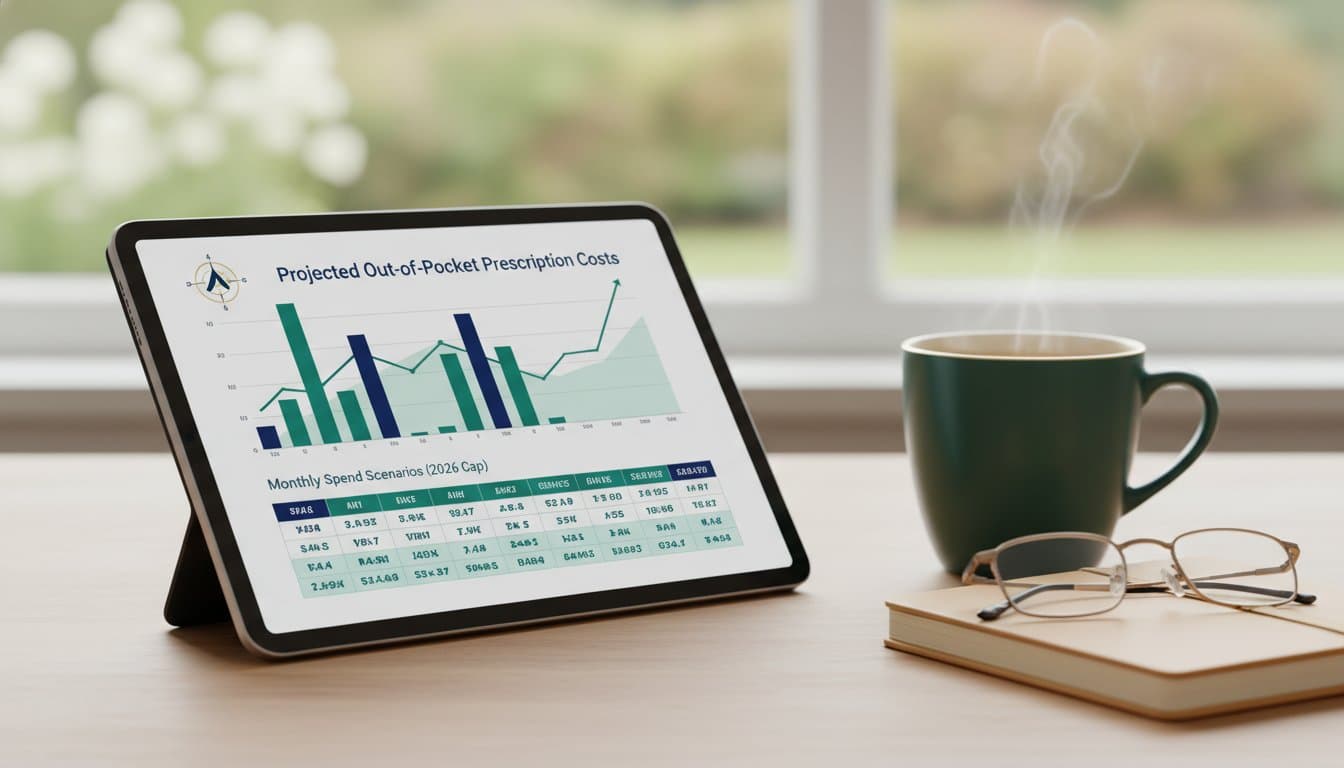
Monthly Spend Table: Real Drug Costs at the Cap
![Table showing projected monthly out-of-pocket costs for 10 commonly prescribed brand-name medications under the 2026 Part D cap structure]
The following table shows projected monthly out-of-pocket costs for commonly prescribed brand-name medications under the 2026 Part D cap structure. These figures assume a $615 deductible and 25% coinsurance in the initial coverage phase.
| Drug Name | Monthly Retail Price | Monthly Cost After Deductible | Months to Hit $2,100 Cap | Total Annual Cost (Capped) |
|---|---|---|---|---|
| Eliquis | $600 | $150 | 10 months | $2,100 |
| Xarelto | $580 | $145 | 11 months | $2,100 |
| Januvia | $550 | $138 | 12 months | $2,100 |
| Trulicity | $950 | $238 | 7 months | $2,100 |
| Jardiance | $575 | $144 | 11 months | $2,100 |
| Ozempic | $1,000 | $250 | 7 months | $2,100 |
| Farxiga | $560 | $140 | 11 months | $2,100 |
| Entresto | $620 | $155 | 10 months | $2,100 |
| Ibrance | $14,000 | $3,500 | 1 month | $2,100 |
| Revlimid | $20,000 | $5,000 | 1 month | $2,100 |
For example, an enrollee taking Eliquis at $600 per month would pay the $615 deductible in January, then $150 per month for the next 10 months, hitting the $2,100 cap by October. From November through December, the plan covers 100% of costs.2
What Counts Toward the $2,100 Out-of-Pocket Limit
The $2,100 cap applies only to drugs on the plan's formulary — non-formulary medications remain unlimited out-of-pocket.5 This distinction is critical when comparing Part D plans during Open Enrollment.
Amounts that count toward the cap include:
- Deductible payments (up to $615 in 2026)3
- Coinsurance payments (25% of drug costs in the initial coverage phase)
- Copayments for covered brand-name and generic drugs
- Payments made through the Medicare Prescription Payment Plan (monthly installment option)
Amounts that do NOT count toward the cap include:
- Premium payments for Part D coverage
- Costs for non-formulary drugs
- Drugs purchased outside the United States
- Medications not covered by Medicare Part D (e.g., certain weight loss drugs)
The Inflation Reduction Act of 2022 made the Part D spending cap permanent federal policy, meaning it applies every year with inflation adjustments.5 Enrollees should verify their medications are on the plan's formulary before enrolling, as switching plans during Open Enrollment (October 15 to December 7) is the only way to ensure coverage for specific drugs.
When You Hit $2,100 vs. $8,000 Pre-Cap
The difference between the 2026 cap and the pre-2025 system is substantial. In 2024, an enrollee taking Ibrance for breast cancer at $14,000 per month would pay roughly $8,000 before catastrophic coverage began, then 5% coinsurance for the rest of the year — totaling over $10,000 annually.1
Under the 2026 cap, that same enrollee pays $615 for the deductible, then 25% of the remaining $1,485 ($371), hitting the $2,100 cap in January.1 For the remaining 11 months, the plan covers 100% of Ibrance costs.2
Consider an enrollee taking three common medications: Eliquis ($600/month), Jardiance ($575/month), and Entresto ($620/month). The combined monthly retail cost is approximately $1,795.3 After the $615 deductible, monthly coinsurance is roughly $449.3 This enrollee hits the $2,100 cap by April, saving approximately $4,000 compared to the pre-cap system.3
Enrollees who take only generic medications may never reach the $2,100 cap. Generic drug costs are typically $10–$50 per month, resulting in annual out-of-pocket spending of $120–$600 — well below the threshold.
Negotiated Drug Prices and Why They Matter
The $2,100 cap is calculated based on negotiated drug prices, not retail prices. Medicare Part D plans negotiate prices with pharmaceutical manufacturers, and those negotiated rates determine what counts toward the out-of-pocket limit.6
The Inflation Reduction Act authorized Medicare to directly negotiate prices for certain high-cost drugs starting in 2026. The first 10 drugs selected for negotiation include Eliquis, Jardiance, Xarelto, Januvia, Farxiga, Entresto, and others.6 These negotiated prices will reduce both the plan's costs and the enrollee's out-of-pocket spending.
For example, if Medicare negotiates Eliquis from $600 to $400 per month, the enrollee's monthly coinsurance drops from $150 to $100. This means it takes longer to reach the $2,100 cap, but total annual spending is lower.
Drug manufacturer negotiation pricing directly affects how quickly enrollees hit the cap. Lower negotiated prices mean lower monthly coinsurance, which delays reaching the $2,100 threshold but reduces total out-of-pocket spending. Enrollees should check their plan's negotiated prices during Open Enrollment, as these vary by plan and pharmacy.
Comparing Part D Plans Using the Cap
When comparing Part D plans for 2026, enrollees should focus on three factors: the plan's formulary (which drugs are covered), the negotiated prices for those drugs, and the deductible amount.
A plan with a $615 deductible and a formulary that includes all of an enrollee's medications may be preferable to a $0 deductible plan that excludes a key drug. The $2,100 cap applies to all Part D plans equally, so formulary coverage and negotiated prices are the primary differentiators.
Enrollees should use the Medicare Plan Finder tool during Open Enrollment (October 15 to December 7) to compare plans. Input each medication and dosage to see estimated annual costs under the $2,100 cap. Plans with lower negotiated prices for specific drugs may result in lower monthly payments, even if the deductible is higher.
The prescription payment plan cap calculator available through Medicare can help estimate monthly costs. Enrollees who take high-cost brand-name drugs should prioritize plans that cover those medications on their formulary, as non-formulary drugs do not count toward the $2,100 cap.5
Medicare Part D Cap vs. Previous Catastrophic Threshold
Before 2025, Medicare Part D had a catastrophic coverage threshold that required enrollees to pay $8,000 in out-of-pocket costs before full coverage kicked in.1 The 2026 cap of $2,100 represents a 74% reduction from that threshold.
The old system had four phases: deductible (e.g., $545 in 2024), initial coverage (25% coinsurance up to $5,030 in total drug costs), coverage gap (25% for brand-name drugs, 5% for generics), and catastrophic coverage (5% coinsurance with no cap). Enrollees taking expensive medications could face unlimited costs in the catastrophic phase.
The new system has three phases: deductible (up to $615), initial coverage (25% coinsurance), and the $2,100 cap. Once the cap is reached, the plan covers 100% of covered drug costs with no additional phases or limits.2
For enrollees taking specialty medications like Ibrance or Revlimid, the difference is significant. Under the old system, annual costs could exceed $15,000.3 Under the 2026 cap, maximum out-of-pocket is $2,100 — a savings of over $12,000 per year.4
Your Next Step
Start by checking your current Part D plan's formulary at Medicare.gov to confirm all your medications are covered. Use the Medicare Plan Finder tool during Open Enrollment (October 15 to December 7) to compare 2026 plans — input each medication and dosage to see estimated annual costs under the $2,100 cap. If your plan changes its formulary or negotiated prices, consider switching to a plan that covers your specific drugs at the lowest negotiated price.
For clients at Smart Money After 60 who take high-cost brand-name medications, the $2,100 cap makes Part D coverage more predictable than ever — but only if their drugs are on the formulary.
Footnotes
-
https://www.goodrx.com/insurance/medicare/medicare-part-d-out-of-pocket-maximum-2025 ↩ ↩2 ↩3 ↩4 ↩5 ↩6
-
https://boomerbenefits.com/how-the-medicare-part-d-2100-cap-works-in-2026/ ↩ ↩2 ↩3 ↩4 ↩5
-
https://www.wealthysinglemommy.com/medicare-drug-cap/ ↩ ↩2 ↩3 ↩4 ↩5 ↩6 ↩7
-
https://hub.quotit.net/blog/your-guide-to-the-medicare-part-d-2100-drug-cap ↩ ↩2 ↩3
-
https://www.cms.gov/newsroom/fact-sheets/medicare-part-d-out-pocket-maximum ↩ ↩2 ↩3 ↩4 ↩5
-
https://www.cms.gov/newsroom/fact-sheets/medicare-part-d-out-pocket-maximum ↩ ↩2